Driving in New Zealand for American Travellers
- Last Updated: 22 Aug 2025
- Publish Date:
- Miles Clark
- Before you visit NZ, NZ Safe Travel, NZ Travel Tips
Does your perfect road trip mean wide-open roads, hardly any traffic, and stunning views around every corner? If you love a good road trip, you’ll love driving in New Zealand.
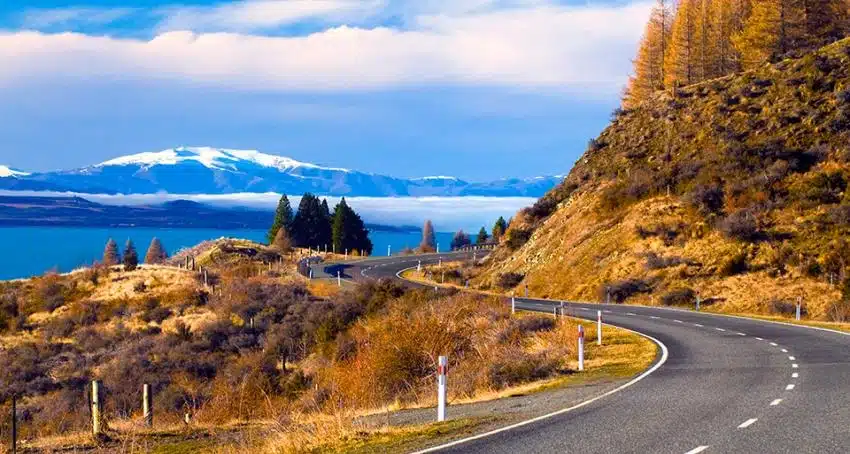
Unlike in the U.S., where interstate highways can feel long and monotonous, driving in New Zealand is part of the adventure. Our roads often are the attraction: imagine winding your way along the Milford Road, crossing Arthur’s Pass on the Great Alpine Highway, or following the coast on the Haast World Heritage Highway. These aren’t just drives – they’re some of the most scenic journeys on the planet.
Kia Ora, we’re MoaTrek, and we’ve been running small group tours in New Zealand since 1971. That means we know these roads inside out – from hidden lookout points to the quirks of driving on the left-hand side.
If you’re planning a trip to New Zealand you may be thinking of driving yourself. Many of our American guests ask us the same questions: Can I drive in New Zealand on my U.S. licence? What’s it like driving on the “wrong” side of the road? Will I feel safe? What are the roads like?
This guide is our friendly, no-nonsense answer to those questions – packed with tips just for American drivers to help you find out the best way to travel around on your New Zealand trip.
Driving in New Zealand is different to driving in the U.S.A.
Here’s what makes driving in New Zealand different: our country is a similar size to the United Kingdom, but only has 5 million people compared to the UK’s 67 million. New Zealand is a similar size to the US states of Colorado, Oregon or Nevada, and with a similar population to Oregon.
Outside the main cities, there’s a lot of wide open spaces, not many traffic lights, very few toll roads, and open highways that wind through mountains, farmland, and coastline. Every drive can be memorable – but with narrow, winding roads and unique rules and hazards, there are a few things you need to know before you grab the keys.
So, if you’re an American planning to hit the road in New Zealand, read on. We’ll cover everything you need to know – from whether your U.S. licence is valid, to what it feels like driving on the left, to why some travellers ultimately choose to let a local guide do the driving on a small-group tour instead.
MoaTrek Travel Tips for American Drivers in New Zealand
- Licence rules: You can drive on your valid U.S. driver’s licence for up to 18 months – no International Driving Permit required.
- Drive on the left: All driving is on the left-hand side, with the steering wheel on the right.
- Speed limits: 100 km/h (≈ 62 mph) on highways, 50 km/h (≈ 31 mph) in towns unless posted otherwise.
- Drink driving laws: Legal blood alcohol limit is 0.05% (stricter than most U.S. states).
- Seat belts: Compulsory for all passengers, front and back.
- Phones: No handheld phone use while driving – hands-free only.
- Road conditions: Expect narrow, winding roads and longer travel times than U.S. interstates.
Contents & Quick Links about driving in New Zealand for Americans
- Can Americans Drive in New Zealand?
- Driving on the Left
- Road Rules & Safety Tips for Driving in New Zealand
- New Zealand Driving Conditions
- Planning your Drives – Distances, Times & Breaks
- Rental Cars in New Zealand
- Common Questions about Driving in New Zealand
- Don’t want to drive in New Zealand? What other options are there?
- Travelling New Zealand with MoaTrek
Can Americans Drive in New Zealand? Licence and Road Rules Explained
Good news, American travellers – yes, you can drive in New Zealand with your valid U.S. driver’s licence.
As long as it’s a full licence and written in English, you won’t need any special paperwork. No International Driving Permit is required here, unless your licence is in another language. You can legally drive in New Zealand for up to 18 months on the licence you already have in your wallet.
But here’s the catch – driving here feels a little different. In New Zealand, we drive on the left-hand side of the road, with the steering wheel on the right. That’s second nature for drivers from the UK or Australia, but for Americans it takes some getting used to. The first few days can feel strange, so give yourself plenty of time to adjust, especially at intersections and roundabouts. Here’s a tip: always look to your right at a roundabout – traffic comes from the opposite direction than you’re used to.
Our speed limits are posted in kilometres per hour, not miles. The maximum on most highways is 100 km/h (about 62 mph), and in towns and cities it’s 50 km/h (around 31 mph) unless signs say otherwise. Speed signs here are easy to spot: a white circle with a bold red border.
Another surprise for many Americans is the cars themselves. Rental cars here are mostly smaller Japanese and Korean models. SUVs and large American-style vehicles are available, but they’re pricey and less common. Don’t worry though – smaller cars are easier to handle on New Zealand’s narrow, winding roads.
So, if you’re planning to rent a car, remember to bring your U.S. licence, stick to the posted speed limits, and take your time adjusting to left-side driving. With a little practice, you’ll soon be cruising like a local.
From the NZ Transport Agency website: “You can drive using an overseas car licence for up to 18 months from your last date of entry into New Zealand.”

Driving on the Left – What American Drivers Should Know
In New Zealand, all driving is on the left-hand side of the road. For our friends from the U.S., this is often the biggest adjustment to make when renting a car here. It’s not just the side of the road that’s different – our vehicles are built with the driver’s seat on the right and the passenger seat on the left. Don’t be surprised if you open the wrong door once or twice on your first day!
Here’s an easy trick to remember: if you’re the driver, you’ll always be closest to the centre line in the middle of the road. If you’re the passenger, you’ll be closest to the edge of the road. Simple, right?
It can feel a little strange at first, but most American visitors get the hang of it quickly. Take your time, drive defensively, and ease into it – roundabouts and intersections are where you’ll notice the difference most. With a bit of practice, driving on the left soon becomes second nature, and you’ll be ready to enjoy those amazing scenic drives.
MoaTrek safety tips for driving on the left
- Pause before turning: Always check both ways and remind yourself which lane to turn into.
- Take roundabouts slowly: Look to your right for oncoming traffic before entering.
- Stay alert on rural roads: Narrow bridges and one-lane stretches are common in New Zealand.
- Use rest stops often: Driving on the left requires extra focus, so build in breaks on longer journeys.
- Follow local drivers’ lead: Watching how Kiwis handle intersections and road signs can help you adjust faster.
Road Rules and Safety Tips for Driving in New Zealand
To enjoy your New Zealand road trip safely (and avoid unexpected fines), it pays to know the local rules and how they differ from driving back home in the U.S. Here’s what every American driver should keep in mind:
- Speed limits: The open road limit in New Zealand is 100 km/h (≈ 62 mph), and in towns and cities it’s 50 km/h (≈ 31 mph) unless posted otherwise. All speeds are shown in kilometres per hour, not miles. Speeding is strictly enforced — police use both fixed cameras and mobile speed traps, even in rural areas. During public holidays and over Christmas, tolerance is very low (as little as 5 km/h over the limit can mean a ticket). Rental car companies pass tickets on, even after you’ve flown home.
- Road signs: Most use international symbols. A red circle with a number is the speed limit. “Give Way” signs mean Yield. There’s no “turn left on red” rule in New Zealand (a big difference from right-on-red in the U.S.). To prepare, review the NZ Road Code or test yourself with the New Zealand Driving Tests quiz.
- Seat belts and child seats: Seatbelts are compulsory for every passenger, front and back. Children under 7 years old must use an approved child safety seat. If your child is 7 or older, a booster isn’t legally required in NZ — though many American families prefer to use one until 8.
- Drink driving laws: The legal blood alcohol limit for drivers 20 and over is 0.05% (lower than the U.S. 0.08%). For drivers under 20, the limit is zero. Police carry out frequent random breath tests, especially in nightlife towns like Queenstown. The safest choice? Never drink and drive.
- Phones and navigation: Using a handheld phone while driving is illegal. Most rental cars in New Zealand will allow you to connect your phone to use hands free, which is the great to help you with navigation and keep your eyes on the road. The winding roads here require full attention — no texting and driving, ever.
- Other laws: Running red lights and stop signs is enforced by cameras as well as police. And remember, unlike in the U.S., you can’t turn left on a red light in New Zealand.
Follow these rules and you’ll find driving in New Zealand both safe and enjoyable — and you’ll avoid any unpleasant surprises or extra costs on your Kiwi road trip.
Find out more about driving rules and regulations in New Zealand here.
Navigating New Zealand’s Unique Road Conditions
Driving in New Zealand will be different than what you’re used to at home. Here are a few things to be aware of when you’re planning your trip to New Zealand.
- Road type & terrain: Outside the motorways near our bigger cities, most New Zealand roads are two lanes, narrow, and winding. With hills, sharp corners, and no median barrier, a 100 km (≈ 62 mph) trip may take up to two hours – not the quick cruise you’re used to on U.S. interstates. Allow plenty of time and enjoy the scenery.
- One-lane bridges: These are common, especially in the South Island. Signs show who has the right of way – the big black arrow means priority, the red arrow means give way. Always slow down, check it’s clear, and cross carefully. A good tip here is to follow a local driver across the bridge at a safe distance.
- Unsealed (gravel) roads: Some scenic detours or side roads may still be gravel. Take it slow, keep a good grip on the wheel, and don’t be afraid to turn back if conditions feel rough. Rental companies may even restrict you from driving certain gravel routes.
- Livestock and road hazards: Now and then, you may meet a herd of sheep or cattle crossing the road – just stop and let the farmer guide them through. And if you notice possum roadkill, don’t be alarmed. Possums are an invasive pest here, so hitting one accidentally is actually seen as helping the environment.
- Driving culture & courtesy: Kiwis are friendly, but on the road, we like to keep things moving. If cars stack up behind you, pull over at the next safe spot and let them past – it’s both polite and expected. A quick toot of the horn or flashing hazards is our way of saying “thanks, mate.”
- Aggressive driving: In bigger cities like Auckland, you might find drivers tailgating or honking if they think you’re too slow. Don’t take it personally – just stay calm, let them by, and carry on safely. Overall, most visitors find driving here straightforward, as long as you’re aware of your surroundings and remain patient.
- Winter driving: In colder months, especially in the South Island, roads can be icy or snowy. Carry chains if you’re driving in alpine areas, check weather forecasts, and allow extra time for safe travel. If you’re not experienced or confident driving in winter conditions, take a tour or organize transport.
- Roundabouts: These are common in New Zealand. Always give way to traffic coming from your right and take your time – they help keep traffic flowing smoothly once you get the hang of them.

MoaTrek Travel Tip - New Zealand Speed Limits & Conversions
| New Zealand Speed Limit (km/h) | Speed in mph | Where you'll see it |
|---|---|---|
| 30 km/h | ~19 mph | Near schools, roadworks, or shared zones |
| 50 km/h | ~31 mph | In towns and city streets |
| 70 km/h | ~43 mph | Town fringes or semi-rural areas |
| 80 km/h | ~50 mph | Urban motorways and some rural roads |
| 100 km/h | ~62 mph | Open roads and highways (default max) |
Planning Your Drives in New Zealand – Distances, Times and Breaks
One of the biggest surprises for American visitors is that while New Zealand looks small on a map, driving here always takes longer than you expect. Our roads are often narrow and winding, so even short distances can feel like a real journey.
A good rule of thumb is to add about 20 minutes for every hour Google Maps suggests. For example, a 300 km (186 mile) drive that might take 3 hours on a U.S. interstate can easily take 4+ hours here.
- Rest breaks and scenic stops
Plan to stop every two hours, minimum. Not just for safety, but because you’ll definitely want to pull over for photos. Look out for the picnic-table signs marking official rest areas and scenic lookouts. Use those instead of stopping on the shoulder, which can be dangerous. - Jet lag and long flights
If you’ve just stepped off a long flight from the U.S., don’t hit the road straight away. Jet lag plus unfamiliar roads is a risky combination. Our advice? Spend your first two nights in your arrival city, rest up, then start your road trip feeling fresh. - Night driving
We recommend avoiding long rural drives after dark. Outside towns, most roads are completely unlit, and sharp corners or wandering wildlife can catch you by surprise. Plus, you’ll miss out on the scenery – and that’s half the fun of driving in New Zealand! - Weather and seasonal tips
Our weather can change in a flash. In winter (June–August), be ready for snow or ice in the South Island’s high country – rental companies can provide chains if you need them. In heavy rain, slow down, as narrow roads can get slippery or flood easily. Always check the forecast before a long drive, especially in alpine regions. You can find live updates at the NZTA Road Conditions page. We recommend bookmarking this link before your trip, as mobile coverage can be patchy on rural highways.
MoaTrek Travel Tip – Use the NZTA Journey Planner
If you’re driving in New Zealand, the official New Zealand Transport Agency has a great online journey planner. It includes road works, closed roads and any potential hazards you might find.
Use the NZTA Journey Planner here.
Rental Cars in New Zealand – Tips for American Travellers
- Transmission: Most rental cars here in New Zealand are automatic. But just like back home, make sure you specifically book an automatic if that’s what you drive. Manual cars (stick-shifts) are still around in New Zealand, so always double-check your booking to avoid surprises at the rental desk.
- Car size and type: Don’t be surprised if your rental car is smaller than what you’re used to in the States. Compact cars like the Toyota Corolla are everywhere. Large SUVs and trucks exist, but they’re more expensive to hire. Many American drivers find a midsize SUV is a good balance – familiar to drive, with a bit more space.
- Fuel (Petrol) costs: The first thing you’ll notice is that Kiwis call fuel or gas, “Petrol” and service stations are “Petrol Stations”. Fuel here is sold by the litre, not the gallon, and it’s more expensive than what you’ll pay back home. At around NZ$2.70 per litre (about US$6.50 per gallon), filling the tank can be a bit of a shock the first time. Good to know in advance for your travel budget.
- Insurance: All rental cars come with basic insurance, but usually with a high deductible (we call it “excess”). To save yourself stress, think about adding the excess reduction package from the rental company or check if your travel insurance or credit card covers rental car damage overseas. It’s always better to be covered than to face hefty bills after a minor scrape.
- Driving apps & navigation: Google Maps works well in New Zealand, but remember you’ll need data or Wi-Fi to use it live. Phone use while driving must be hands-free, connecting your phone to the car is the best option here.
MoaTrek safety tip – Emergency services for driving in New Zealand
In New Zealand, the emergency number is 111, not 911.
If you need roadside assistance, most major rental companies partner with the AA (Automobile Association). This is the equivalent of a motoring club or society and a really handy resource for all drivers in New Zealand, you’ll hear Kiwis talking about the “AA”, this is what they mean.
On the road in New Zealand
Out on the road, you’ll quickly see that Kiwis are a friendly and helpful bunch.
Outside the big cities, if your car breaks down, it won’t be long before someone pulls over to lend a hand. New Zealanders are practical and handy with tools – you’ll never be too far from an amateur mechanic ready to help out. Of course, in the cities you might notice the odd boy racer or speeding motorcyclist on the motorways, but this is more the exception than the rule.
You may also be flagged down by the police at some point on your journey. Don’t worry – if you’re sticking to the rules, there’s nothing to fear. Just be sure to carry your licence at all times, as that’s the first thing they’ll ask for. The police here are generally friendly, polite, and might even call you “mate” and ask you how your trip is going. That’s not cheek – it’s just the Kiwi way, and you’ll probably end up loving it.
New Zealand roads are unbelievably scenic
The landscapes you’ll drive through in both islands are breathtaking, and it’s easy to get distracted. Plan to stop regularly – look for the picnic-table signs marking rest areas, where you can stretch your legs or enjoy a packed lunch. These breaks help you stay alert and give you a chance to really soak up the views.
There are plenty of scenic lookout points along main highways wherever there’s a waterfall, ocean, valley, or mountain vista. They’re all over the place, so use these spots rather than stopping on blind bends. Not only is it safer, but you’ll often meet other travellers there, perfect if you’d like someone to snap a group photo.
What are the most scenic roads in New Zealand? Find out more here.
Check the weather before you drive
Be prepared for changing conditions. The West Coast of the South Island, for example, is one of the wettest places on earth. Rain can make visibility tough, so slow down and avoid travelling at night in those conditions if you can. In winter, especially if you’re heading to the ski fields, you may also need chains to tackle alpine roads safely.
What are all those brown lumps on the road?
Don’t panic if you see lots of brown coloured bumps all over the roads. Be prepared to see a lot of roadkill, but don’t get too upset. These are possums, an introduced species which is very destructive to the native forest. One less possum means more breathing space for the indigenous flora and fauna of New Zealand.
One quirk of driving in New Zealand you may notice is that the locals will applaud you if you do manage to take one out!

Common Questions about Driving in New Zealand for Americans
- Do I need an International Driving Permit to drive in New Zealand?
No. If you have a valid U.S. driver’s licence and you’re staying less than 18 months, you don’t need an International Driving Permit. An IDP is mainly a translation for non-English licenses. - How long can I drive in New Zealand on my U.S. licence?
Up to 18 months from the date you arrive in New Zealand. That’s plenty for a vacation; if you plan to stay longer you’ll need to apply for a New Zealand driver’s licence. - What side of the road do New Zealanders drive on?
The left-hand side. The driver’s seat is on the right side of the car, and turns and roundabouts are navigated differently than in the U.S. - Is it safe for Americans to drive in New Zealand?
Yes—if you drive carefully and follow the rules. Roads can be narrower and windier than U.S. highways. Stick to speed limits, take regular breaks, and pull over to let faster traffic pass when safe. - What is the speed limit in New Zealand?
Generally 100 km/h (about 62 mph) on highways/open roads and 50 km/h (about 31 mph) in urban areas unless signs say otherwise. Speed cameras are common, so follow posted limits. - Can I use Google Maps or my phone for navigation?
Yes, but only hands-free. It’s illegal to hold a phone while driving. Set your route before you go, use a dashboard mount, or connect your phone to your car. - What do I do if I get pulled over by the police?
Pull over safely, stay in the car, and have your driver’s license ready. Stops may be routine (e.g., random breath tests). If there’s an issue, officers will explain what to do next. - What if I don’t feel comfortable driving in New Zealand?
Consider joining an organized tour so a local Kiwi driver handles the roads while you relax and enjoy the scenery. Many American visitors prefer this stress-free option.
MoaTrek Traveller Feedback – Joan & Rich from the U.S.A.
We are usually independent travellers and have never done a group tour before. However, after driving on the left side of the many very narrow roads in Scotland and Ireland, my husband said, “Never again!” He would be so focused on the road and me on Google Maps, we tended to miss a lot.
We looked into group tours and decided it would have to be a small group if we went that route. MoaTrek’s reviews sold us! And they weren’t wrong!
Joan & Rich, USA. Kakapo 21-day tour, March 2025 with Kiwi Guide Brian.
Driving in New Zealand not for you? Take a tour and leave the driving to someone else
Driving on the “other” side of the road, in an unfamiliar car, on our windy, narrow roads isn’t everyone’s idea of a relaxing holiday. If that sounds a little daunting, don’t worry – there’s a perfect option for you.
Join us on a MoaTrek New Zealand Small Group tour. We’ve been exploring New Zealand for decades, so we know these roads and all the best hidden spots along the way.
On tour, you won’t have to worry about unfamiliar road rules, navigating, or deciphering new signs – you can sit back, relax, and still see all the iconic sights. Your MoaTrek Kiwi guide will handle the driving and share local stories that bring the journey to life (and you’ll quickly learn what those funny road signs mean!).
You’ll travel with like-minded folks from all around the world. Many of our American guests tell us taking a tour was the best decision of their trip: they could enjoy New Zealand’s incredible scenery without the stress of driving and handling the logistics.
It’s the easiest way to make your holiday truly relaxing and unforgettable.
What our American guests tell us they love about MoaTrek tours
- No driving stress: Forget about road rules, maps, or narrow winding highways – just relax and enjoy the ride.
- See more, safely: Our Kiwi guides know the best routes, lookout points, and hidden gems most visitors miss.
- Local insights: Learn about New Zealand’s culture, history, and quirky roadside stories from a friendly Kiwi guide.
- Make friends: Travel with like-minded people – many of our guests say new meeting new people and making friends was the highlight of their trip.
- Time to enjoy the view: With someone else behind the wheel, you can focus on the mountains, lakes, and landscapes (instead of traffic signs!).

Travelling New Zealand with MoaTrek
We hope this guide helps you get a clearer picture about driving in New Zealand—and what the right option is for your trip. However you decide to explore our beautiful country, we’re excited to welcome you to Aotearoa, our stunning islands in the South Pacific.
If leaving the driving to someone else and enjoying all the views on a small group tour sounds like you, we’d love to chat. As New Zealand’s leading small group tour operator, we take care of all the tricky parts – no need to worry about driving, bookings, or missing the hidden gems.
Take a look at our New Zealand small group tours or get in touch with our friendly team—we’re always keen to hear about your dream trip to New Zealand and help you bring it to life.
One thing our travellers often say is how much they appreciated being able to ask us questions before they even left home. We love helping people get ready for their big adventure and are more than happy to share tips, advice, and insights to help you plan your perfect journey.
See you soon in New Zealand!

- Miles Clark
- Before you visit NZ, NZ Safe Travel, NZ Travel Tips