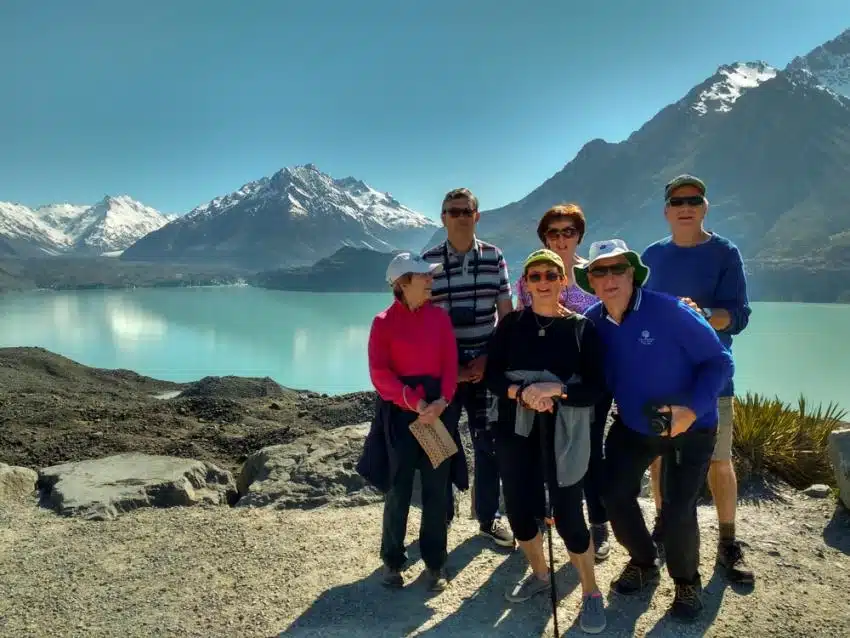

Safety in New Zealand for Senior Travellers
- Last Updated: 16 Dec 2025
- Publish Date:
- Miles Clark
- Before you visit NZ, NZ Safe Travel, NZ Senior Travel, NZ Travel Info, NZ Travel Tips
Are you thinking of travelling to New Zealand and want to know first if it’s safe? Before making a big international trip, we know safety will be on your mind.
Kia ora, we’re MoaTrek and we’ve been hosting travellers on our New Zealand small group tours for seniors since 1971, and we hear the same thing again and again from travellers in their 50s, 60s and 70s: “I felt safe everywhere.” Part of that is the Kiwi way — people are warm, helpful, and happy to chat — and part of it is practical: a stable, developed nation with good roads, clear signage, dependable operators, and modern hospitals and clinics never far away.
New Zealand has low rates of crime, friendly English-speaking locals, reliable emergency services, and excellent healthcare, which gives over-50 travellers real peace of mind. Add calm cities, well-kept national parks, and easy travel logistics, and you can relax and enjoy every day of your trip rather than worry your way through it.
In this article, we’ll show you exactly why New Zealand feels so safe for senior travellers, plus simple tips to keep your trip smooth from day one.
Quick Links – Safety in New Zealand for senior travellers
- New Zealand is a safe place to travel
- New Zealand emergency phone numbers
- Crime & personal security in New Zealand
- MoaTrek traveller interview with Kathy – a senior solo traveller
- Health, medical care & insurance
- Outdoor & environmental safety
- Transportation & road safety
- Safety tips for senior travellers
- Travelling New Zealand with MoaTrek
Quick facts about safety in New Zealand
- Consistently one of the world’s safest countries — ranked top 5 globally for peace and personal security (Global Peace Index).
- Geographically isolated and politically stable — no nearby conflicts and a calm, well-governed society.
- Great travel infrastructure and public facilities — New Zealand is very welcoming to travellers and has good public facilities and services.
- Friendly, tolerant culture — low social tension; Kiwis value fairness and resolve issues calmly.
- English-speaking and helpful — easy to ask for directions, assistance, and local advice.
- High health and hygiene standards — clean, safe drinking water; excellent food safety.
- No required travel vaccinations — routine immunisations recommended, but none mandated for entry.
- Good international reputation — the country’s peace and tranquillity even attract high-profile residents and second-home owners.
Why New Zealand is safe for over-50 travellers
New Zealand always sits right near the top of the global safety lists — ranked 3rd most peaceful country in the world in 2025 — and it feels that way on the ground. For senior travellers, that translates into calm cities, relaxed small towns and a general sense that things just work the way they should.
Here’s why travelling in New Zealand feels so safe
- Peaceful, stable, and far away from trouble
We’re an island nation a long way from global flashpoints, and we have steady politics and low levels of social unrest. You won’t find protests or sirens dominating your day — more likely birdsong and a friendly “gidday” from the café barista. - Low crime and corruption
Crime rates are comparatively low and public trust is high, which takes the edge off for travellers. Daytime strolls, evening dinners, and scenic walks feel comfortable for visitors of any age. - Laid-back, welcoming culture
Kiwis are community-minded and patient, and English is spoken everywhere, so asking for help is easy. You’ll notice the overall tone is calm and courteous — even our police typically don’t carry guns on regular patrol, which says a lot about the low-threat environment. - Reassuring for Americans
If you’re arriving from the U.S., many guests tell us they feel very comfortable in New Zealand right from the start, you can relax and enjoy all the fun experiences on offer without worrying about political turmoil or disruption.
Put simply, New Zealand’s mix of peace, stability, law and order and friendly locals makes it an easy, relaxed destination for travellers in their 50s, 60s, 70s and beyond.
What our guests said about safety while travelling in New Zealand
“We really enjoyed the wide variety of options offered on this tour, including the choice to have down time when and if we chose. The bus was very comfortable, and we felt confident that we were well taken care of with regard to our safety.”
Why do senior travellers love New Zealand?
We’ve written a friendly guide explaining why travellers over 50 love it here — it’s our safe cities, smooth travel, big scenery and plenty to do at your own pace, in every season. Handy travel tips on when to visit, favourite activities and why small-group touring is a great choice.
Read more about why over-50 travellers love New Zealand here

Crime & personal security for travellers in New Zealand
No place is 100% crime-free, but as we mentioned above, New Zealand’s crime rates are far lower than what many Americans are used to. That aligns with what visitors feel on the ground: minor incidents can happen (more so in busy city spots), but serious crime is uncommon by global standards and unlikely to involve travellers.
Simple, travel precautions for staying safe in New Zealand
- Keep your bags zipped in busy places; don’t flash valuables or large amounts of cash.
- Lock accommodation and vehicles; stash valuables out of sight.
- Shield your PIN at ATMs and avoid any machine that looks tampered with.
- Consider a money belt/under-clothing pouch when transiting.
- Walk in well-lit areas with lots of people around at night or with a buddy.
- Keep separate copies of passports/cards and make sure your travel insurance covers all your valuable items.
These basics go a long way here — common sense ways of protecting yourself that you already practice in your home country. These are useful tips to follow as a rule anywhere you travel.
Travelling alone? Safety in New Zealand for solo travellers
New Zealand is one of the easiest and friendliest places in the world to explore on your own — even for first-time solo travellers. You’ll find locals who are happy to help, safe small towns, and plenty of tours that make meeting people easy.
Health, Medical Care & Travel Insurance in New Zealand
New Zealand’s water is safe to drink straight from the tap, food hygiene standards are high, and hospitals and clinics operate to a first-world standard. If you do fall ill, you’ll be in excellent hands. That said, medical treatment can be costly for visitors, so travel insurance is essential.
Before you fly, have a quick check-up with your doctor to talk through fitness for travel and any pre-existing conditions. Bring an ample supply of your regular medications in their original packaging, plus a written prescription (handy if you need a top-up at a New Zealand pharmacy or a quick visit to a local GP). A simple doctor’s note for medications or medical devices can also smooth things at airport security or customs.
Make sure your travel insurance covers pre-existing conditions and includes medical evacuation, just in case. Think of it as your “sleep-easy” policy for your big trip.
New Zealand has a no-fault accident insurance scheme which covers travellers
Something most travellers to New Zealand should know about is ACC (Accident Compensation Corporation). This is a nationwide, no-fault, accident insurance scheme which also covers non-residents. If you take a tumble on a walk or slip getting off a boat, ACC can help with the immediate medical costs of that accident.
It’s a great safety net, but it doesn’t replace travel insurance, which you still need for non-accident care, cancellations, and the rest.
Quick health checklist for visiting New Zealand
- Pack enough prescription meds for your whole trip in original containers, with a written script.
- Get travel insurance that covers pre-existing conditions and medical evacuation.
- Book a pre-trip health check and carry a brief doctor’s note for any meds or medical devices.
- If you need care on the road, pharmacies and GPs are easy to access in towns and cities; in an emergency, dial 111.
- Remember ACC covers accidental injuries to visitors.
An experience our travellers had with an illness while in New Zealand
“We had to drop out due to illness for a couple of days and MoaTrek were so helpful with arrangements & getting us back on track. Our guide Lindsay took extra care of us in the most polite and special ways which was much appreciated. He taught us so much, we will have a special place in our hearts for him forever. Thank you!”
MoaTrek Travel Tip – Emergency support & embassy info
Keep your embassy or consulate details handy (save them in your phone and on paper). If you’re from the U.S., consider registering your trip with the State Department’s STEP programme to receive local safety alerts while you’re here.

Outdoor & Environmental Safety in New Zealand
New Zealand’s great outdoors is a huge part of why people love visiting — and the good news is you don’t have to worry about dangerous wildlife while you’re here. We have no snakes or dangerous animals; the only native venomous spider is the katipo, which is rare and lives in a few coastal dune areas. In short: enjoy the tracks and beaches without the “what’s that rustle?” anxiety.
Sun & weather:
Our UV is stronger than many visitors expect, so cover up and use sunscreen whenever the UV index is 3 or more. Summer peaks can reach 12–13 in parts of the country, which is why locals are big on hats, sunnies and shade. Also, Kiwi weather can change fast — especially in the hills — so pack layers and a rain jacket even on blue-sky mornings.
Safety on walks & hikes:
Before any walk, check track info and conditions with the Department of Conservation (DOC) visitor centres — the rangers are brilliant for local advice. If you’re heading out independently, follow the Land Safety Code and consider lodging an “Outdoors Intentions” plan via AdventureSmart; for remote trips, hiring or carrying a PLB (personal locator beacon) is a simple extra safety net.
Water safety:
At the beach, pick a spot with lifeguards on duty and swim between the red and yellow flags — the flagged area is where conditions are actively monitored.
If the ground shakes:
Earthquakes are uncommon on holiday, but Kiwis grow up with simple drills. Remember Drop, Cover, Hold; if you feel a long or strong quake near the coast, move to higher ground once the shaking stops.
Quick outdoor safety checklist
- Pack layers and a rain jacket; check the forecast and track notes before you go hiking.
- Tell someone your plan or submit an Outdoors Intentions form; consider a personal locator beacon for remote areas or travel with a local guide.
- Drink water, use sun protection, don’t overdo it on hot days, and choose tracks that match your fitness.
- On beaches, swim between the flags; in boats, wear a lifejacket. Water tourism activity operators will provide these for you.
Follow these basics — most of which you’re probably doing already — and you’ll be free to focus on the good stuff: big views, birdsong, and a well-earned ice cream at the end of the day.
MoaTrek Travel Tip – Let your guide take care of all your safety while travelling
Travelling on a tour, with an expert guide at the helm, is a stress-free way to look after yourself in a new country. As well as taking care of all the driving, luggage, bookings and travel logistics, your guide is backed up by a team of experienced travel pros who are all here to help if anything unexpected happens.
See our 21-Day Kakapo New Zealand tour – our most popular tour with senior travellers.

Transportation & Road Safety in New Zealand
Getting around New Zealand is part of the adventure — the roads are well-maintained, traffic is light outside the cities, and the scenery makes every drive a highlight. That said, if you’re visiting from the U.S. or Canada, you’ll notice one big difference: we drive on the left-hand side of the road.
For many travellers, that takes a little adjustment at first. Take your time, drive during daylight hours if you can, and plan shorter journeys so you can stop and enjoy the views. Rural and coastal roads can be winding, and distances will take longer than they look on a map or what you’re used to back home, but that’s all part of the fun — there’s no rush here in New Zealand.
Most rental cars are automatic, routes are well signposted in English, and fuel stations are easy to find. If you’re not confident about driving on the “wrong” side of the road, public transport and domestic flights are excellent alternatives, and guided small-group tours like ours mean you can sit back, relax, and let a local pro handle the driving while you enjoy the views.
What our guests said about safety on the road in New Zealand
“I always felt safe and secure with our guide Sean’s driving and attention to safety protocols. He was very professional yet personable too.”
Thinking about driving in New Zealand?
Plenty of visitors do — and love the freedom it brings. Being prepared goes a long way here: take it slow, stick to daylight, and plan extra time for our scenic, winding roads.
For practical tips (left-hand driving, road rules, fuel stops, distances, and more), read our guide to driving in New Zealand for Americans here.

Smart safety planning for over-50 travellers in New Zealand
Even in a place as relaxed as New Zealand, it pays to use the usual travel smarts — the same ones you’d use in Paris, Tokyo or back home. Just use your experience and judgement, folks are friendly, so if you are well prepared and sensible, your trip will be low-stress and lots of fun.
Safety Tips for Senior Travellers to New Zealand
Here’s a quick checklist to keep your trip easy and worry-free. Most of this is common sense you already use at home — a few Kiwi-flavoured tweaks and you’re sorted.
- Stay connected
Select a roaming plan or pick up a local SIM/eSIM when you land and keep your phone charged. Coverage is great in towns and along highways, thinner in remote spots — handy for maps, weather checks and staying connected. - Pace yourself (NZ looks small, but there’s lots to see)
Aim for one activity per day and leave time for photo stops and coffee breaks. That’s safe travel and a better holiday. - Driving vs. being driven
A lot of our rural roads are narrow, winding and have no shoulder. If you’re not comfortable driving, join a tour and let a local pro do all the work so you can relax and enjoy every minute of your trip. - Health & meds
Bring enough prescription meds (in original packaging) plus a written script. Food and healthcare standards are high — but travel insurance with medical cover is a must. - Outdoor smarts
Our sun is strong — hat, sunscreen and sunglasses are your best mates. Check the forecast, carry water, wear layers, and choose tracks that suit your fitness. - Simple security habits
Secure your bags in busy areas, don’t leave valuables in sight in cars, and stick to well-lit streets with people around at night. - Documents & backups
Keep digital and paper copies of your passport, insurance, and itinerary. Store a spare ID/credit card separately as a backup. - Embassy & alerts
Save your embassy/consulate details; if you’re from the U.S., register your trip with the State Department’s STEP programme for handy travel updates. - Current entry requirements
There are currently no COVID-related entry restrictions for New Zealand, but it’s still wise to travel insured and pack any personal health items you prefer. - Relax — NZ is safe and welcoming
Day-to-day life is calm, services run smoothly, and Kiwis are happy to help. If you’re ever unsure, just ask your hotel or a local — you’ll be pointed the right way with a smile.
Most travellers to New Zealand never have any safety issues or incidents. Tick off these basics and you can focus on the fun bits — big scenery, enjoying the great outdoors and making friends with the locals.
Travelling New Zealand with MoaTrek
New Zealand really is one of the safest and most enjoyable places in the world to travel, especially for senior visitors. Use a bit of common sense, stay aware of your surroundings, and you’ll find the biggest danger is simply not wanting to leave!
Knowing what to expect before you arrive goes a long way toward a relaxed trip. With a little preparation, you can enjoy New Zealand’s stunning landscapes, friendly locals, and easy-going vibes with total peace of mind.
Many travellers choose to explore on our New Zealand small group tours for seniors for exactly these reasons — it’s carefree, social, and completely hassle-free. Your MoaTrek Kiwi guide will handle all the details, share local tips, and keep everything running smoothly while you focus on enjoying yourself. Whether you join one of our tours or set off on your own, we can’t wait to welcome you here in New Zealand.
Talk to one of our friendly team now to start planning your New Zealand “Trip of a Lifetime”.
Read more about senior travel in New Zealand
Discover our New Zealand tours for senior travellers
Why over-50 travellers love New Zealand
The best activities in New Zealand for senior travellers
Interview with Kathy, senior traveller to New Zealand
Travel tips & common questions about travelling to New Zealand

- Miles Clark
- Before you visit NZ, NZ Safe Travel, NZ Senior Travel, NZ Travel Info, NZ Travel Tips